



MC1R
MC1R (Melanocortin 1 Receptor) is a melanocyte-enriched Gs-coupled receptor that functions as a central regulator of pigmentation, ultraviolet (UV) response, and melanoma susceptibility through control of melanin synthesis and cellular photoprotection[1]. Upon activation by melanocortin ligands such as α-melanocyte-stimulating hormone (α-MSH) or adrenocorticotropic hormone (ACTH), MC1R stimulates adenylate cyclase and elevates cAMP signaling, leading to activation of CREB and MITF and promoting eumelanin production, DNA repair, and antioxidant defense programs in melanocytes[2][3]. Mechanistically, MC1R signaling extends beyond pigmentation and contributes to adaptive responses against UV-induced genomic damage, linking melanogenesis with maintenance of genome stability[1][3]. In disease contexts, loss-of-function MC1R variants are associated with fair skin, red-hair phenotypes, impaired photoprotection, and increased melanoma risk, making MC1R a widely used genetic and experimental model for studying pigment biology and skin cancer susceptibility[1][2]. Compared with other melanocortin receptor family members, MC1R is distinguished by its predominant role in melanocyte biology and regulation of epidermal pigmentation, whereas other melanocortin receptors mediate endocrine, metabolic, or energy-homeostasis functions[4]. For experimental applications, both endogenous and synthetic MC1R agonists are used to investigate melanogenesis, DNA repair signaling, and photoprotective mechanisms, supporting continued interest in MC1R-targeted pharmacological studies[3][5].
Verweise:
- [1]. Wolf Horrell EM, et al. Melanocortin 1 Receptor: Structure, Function, and Regulation. Front Genet. 2016 May 31;7:95. [Content Brief]
- [2]. Medicine-and-dentistry/melanocortin-1-receptor. sciencedirect.topics.
- [3]. Guida S, Guida G, Goding CR. MC1R Functions, Expression, and Implications for Targeted Therapy. J Invest Dermatol. 2022 Feb;142(2):293-302.e1. [Content Brief]
- [4]. Wikipedia.
- [5]. MC1R gene information from NCBI.
-
MC1R Verwandte Produkte (21)
Verwandte Produkte (21)

- 1
- 2
-
Setmelanotide
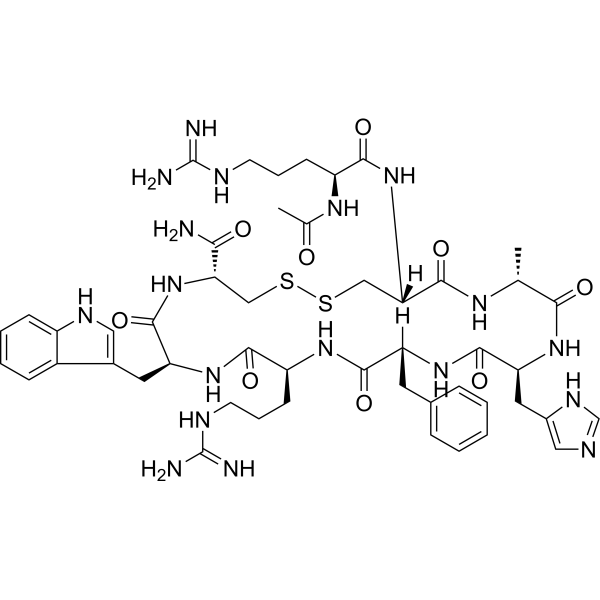 0 ImagesSynonyms: RM-493; BIM-22493; IRC-022493Setmelanotide (RM-493) is a blood-brain barrier-permeable, selective MC4R agonist with a Ki value of 2.1 nM for hMC4R. Setmelanotide activates the CaMKK2/AMPK signaling pathway. Setmelanotide mediates body weight homeostasis, feeding regulation and energy expenditure modulation; it reduces food intake, induces weight loss, decreases obesity severity, increases daytime activity and energy expenditure, lowers levels of leptin, triglycerides, fasting insulin and diastolic blood pressure, improves insulin sensitivity, glucose tolerance and fatty liver condition, and reverses respiratory depression. Setmelanotide is applicable to research related to obesity, hyperinsulinemia, fatty liver and respiratory depression.
-
Melanotan I
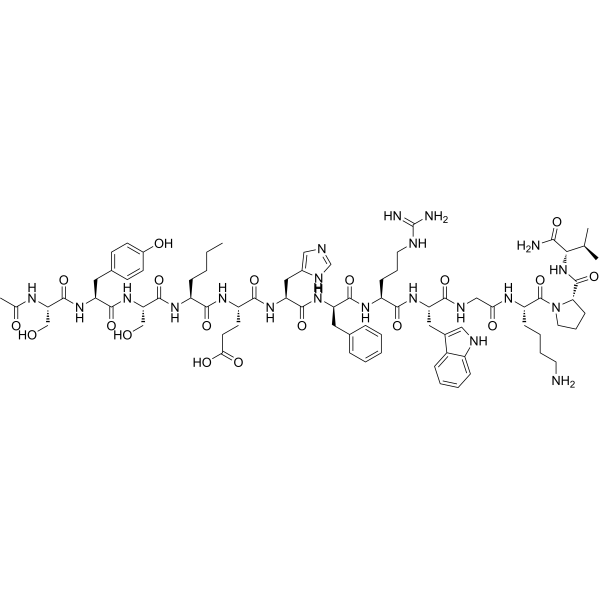 0 ImagesSynonyms: MT-I; [Nle4,D-Phe7]-α-MSHMelanotan I (MT-I; [Nle4,D-Phe7]-α-MSH) is an α-MSH (HY-P0252) analog, synthetic melanotropic peptide, and melanocortin receptor (MCR) agonist. Melanotan I induces skin tanning by mimicking the action of α-MSH on the melanocortin 1 receptor (MC1R) in melanocytes. As an appetite suppressant, Melanotan I impairs the ability of insulin to inhibit endogenous glucose production, suppresses leptin secretion from adipose tissue, and thereby reduces voluntary feed intake in ewes. Melanotan I can be used in research related to UV-induced skin damage, polymorphic light eruption, ruminant feeding, and sexual dysfunction.
-
MSG606
 0 ImagesMSG606 is a selective melanocortin 1 receptor (MC1R) antagonist. MSG606 can abolish the neuroprotective effects of BMS-470539 (HY-15616) (MC1R agonist). MSG606 can inhibit cancer cell proliferation and transition from the G1 to the S phase. MSG606 can delay pain hypersensitivity and reduce cholesterol levels. MSG606 can be used for the researches of cancer, inflammation, neurological and metabolic disease, such as breast cancer and subarachnoid hemorrhage (SAH).
-
JNJ-10229570
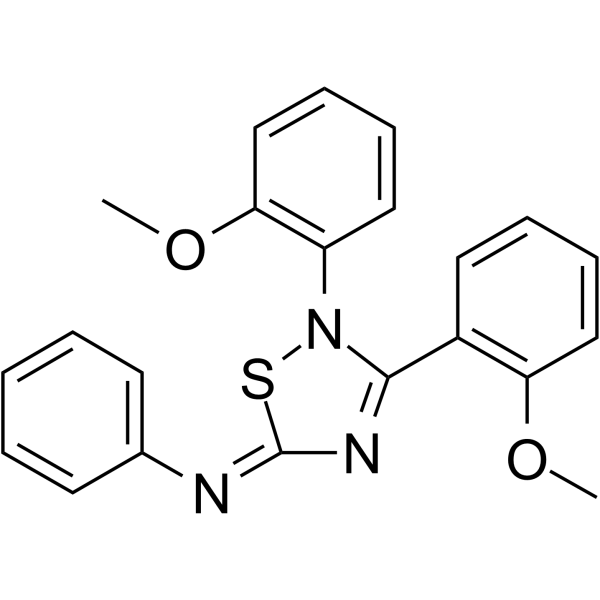 0 ImagesJNJ-10229570 is an antagonist of melanocortin receptor 1 (MC1R) and melanocortin receptor 5 (MC5R), which inhibits sebaceous gland differentiation and the production of sebum-specific lipids. JNJ-10229570 inhibits the binding of 125I-NDP-α-MSH to cells expressing human MC1R and MC5R, with IC50 values of 270 nM and 200 nM, respectively.
-
BMS-470539 dihydrochloride
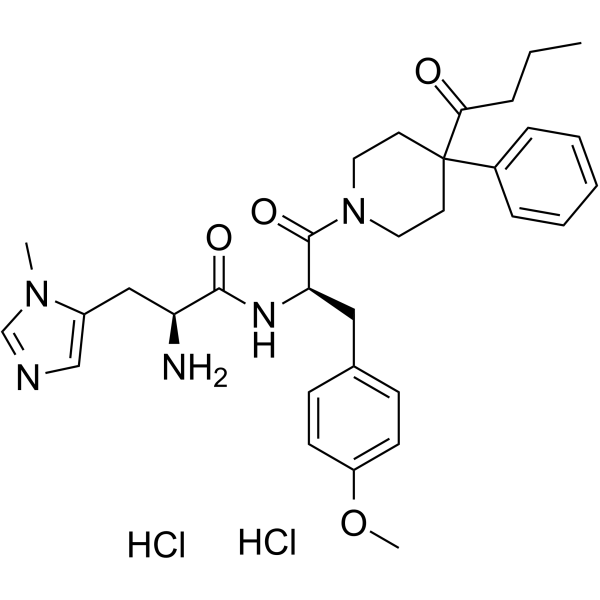 0 ImagesBMS-470539 dihydrochloride is a highly potent and selective melanocortin-1 receptor (MC-1R) agonist with an IC50 of 120 nM, an EC50 of 28 nM. BMS-470539 dihydrochloride does not activate MC-3R and is a very weak partial agonist at MC-4R and MC-5R. BMS-470539 dihydrochloride has potently anti-inflammatory properties.
-
LY2112688
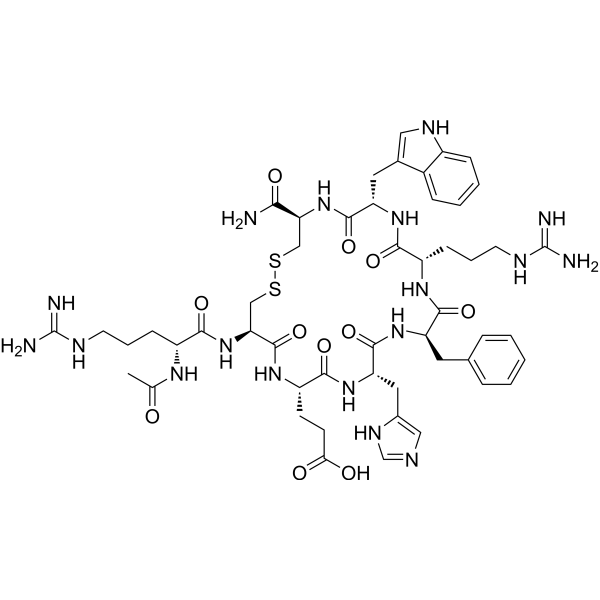 0 ImagesSynonyms: Ac-(d-Arg)-CEH-(d-Phe)-RWC-NH2LY2112688 (Ac-(d-Arg)-CEH-(d-Phe)-RWC-NH2) is a synthetic peptide selective melanocortin 4 receptor (MC4R) agonist with a Ki of 0.13 nM for human MC4R and Ki values of 165, 74, and 1713 nM for human MC1R, MC3R, and MC5R, respectively. LY2112688 activates MC4R-mediated cAMP signaling and promotes PYY and GLP-1 release by activating peripheral MC4R in enteroendocrine L cells; Kir7.1 signaling in MC4R neurons is involved in its sustained suppression of food intake. LY2112688 inhibits food intake in vivo and can elevate heart rate and blood pressure. LY2112688 is useful for research on obesity, energy homeostasis, and MC4R signaling.
-
Nonapeptide-1 acetate salt
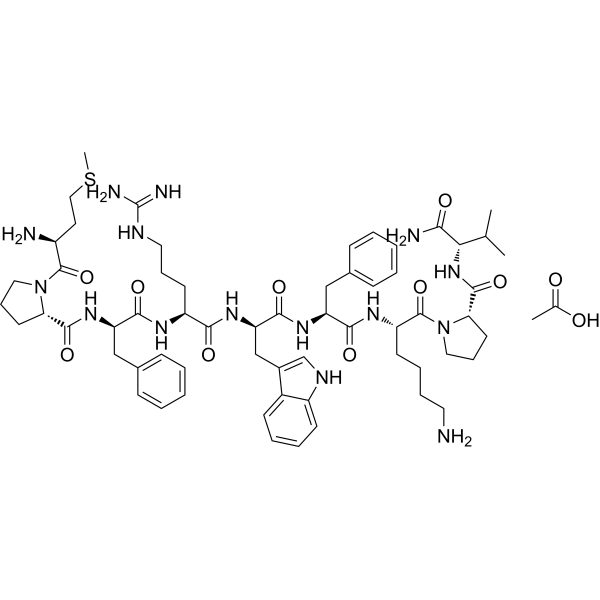 0 ImagesArt. -Nr.: HY-P0097ASynonyms: Melanostatine-5 acetate saltNonapeptide-1 (Melanostatine-5) acetate salt, a peptide hormone, is a selective antagonist of MC1R (Ki: 40 nM). Nonapeptide-1 acetate salt is a competitive α-MSH antagonist that potently inhibits intracellular cAMP and melanosome dispersion induced by α-MSH in melanocytes (IC50: 2.5 nM and 11 nM, respectively). Nonapeptide-1 acetate salt inhibits melanin synthesis, and can be used in the research of skin pigmentation and regulation of steroid production in the adrenal gland, skin cancer.
-
Palmitoyl tetrapeptide-20
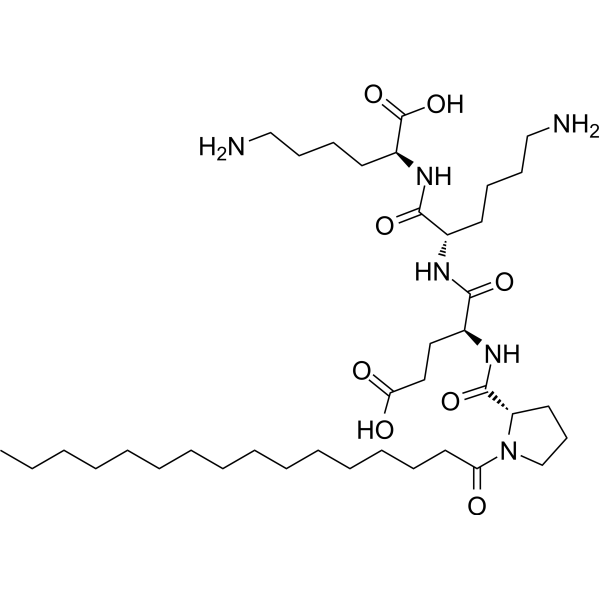 0 ImagesArt. -Nr.: HY-P5247Reinheit: 99.21%Synonyms: PTP20Palmitoyl tetrapeptide-20 (PTP20) is a biomimetic peptide agonist of α-MSH. Palmitoyl tetrapeptide-20 promotes hair pigmentation and delays hair graying by activating the MC1-R pathway (AC50: 0.16 nM), enhancing catalase activity to reduce H2O2 accumulation, and upregulating SIRT1 activity. Palmitoyl tetrapeptide-20 can be used in research on preventing hair loss and improving hair graying.
-
Nonapeptide-1
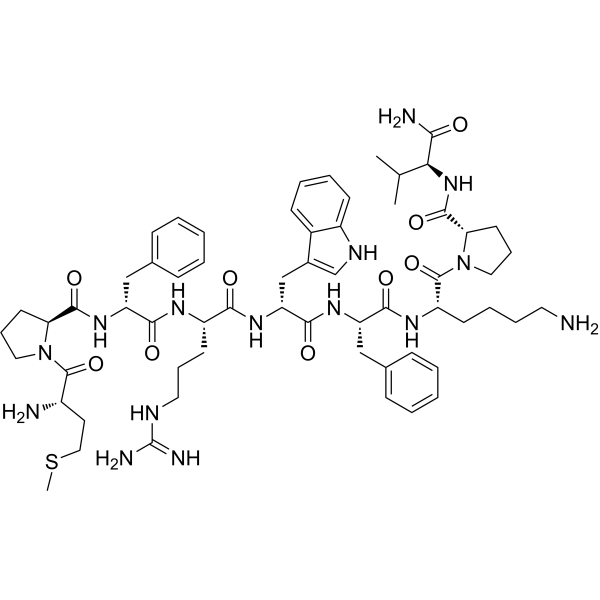 0 ImagesSynonyms: Melanostatine-5Nonapeptide-1 (Melanostatine-5), a peptide hormone, is a selective antagonist of MC1R (Ki: 40 nM). Nonapeptide-1 is a competitive α-MSH antagonist that potently inhibits intracellular cAMP and melanosome dispersion induced by α-MSH in melanocytes (IC50: 2.5 nM and 11 nM, respectively). Nonapeptide-1 inhibits melanin synthesis, and can be used in the research of skin pigmentation and regulation of steroid production in the adrenal gland, skin cancer.
-
Resomelagon
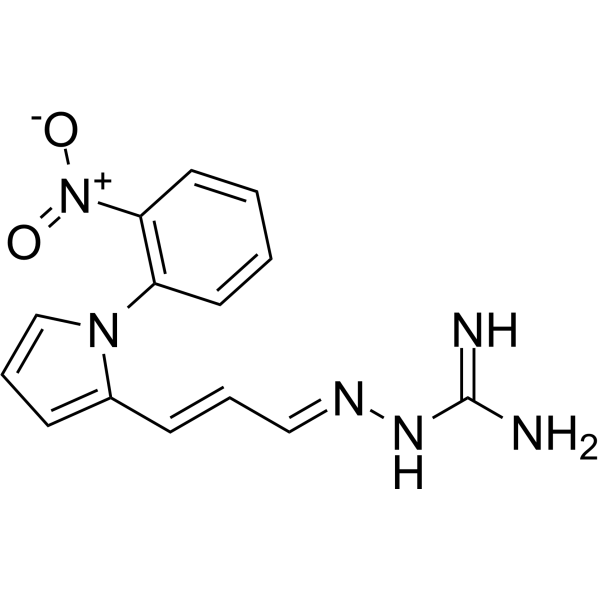 0 ImagesSynonyms: AP1189Resomelagon (AP1189) is a potent, orally active melanocortin receptor (MR) agonist about MC1 and MC3. Resomelagon induces ERK1/2 phosphorylation and Ca2+ mobilization. Resomelagon has anti-inflammatory activity. Resomelagon can be used for obesity and chronic inflammation research.

-
Setmelanotide monoacetate
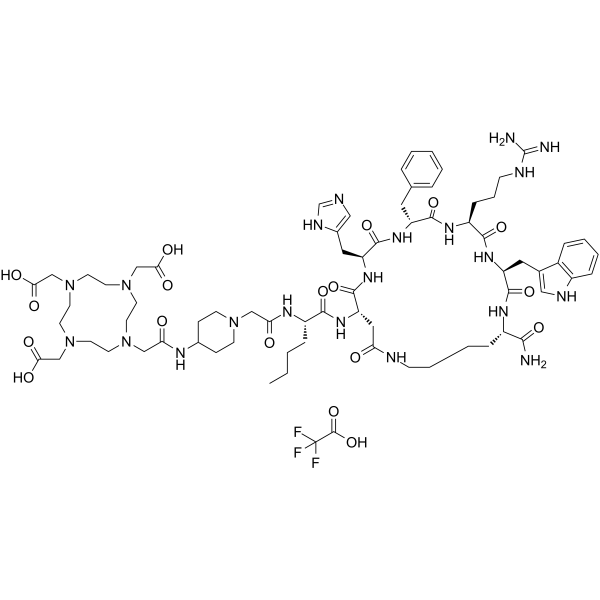
 0 ImagesSynonyms: RM-493 monoacetate; BIM-22493 monoacetate; IRC-022493 monoacetateSetmelanotide monoacetate (RM-493 monoacetate) is a blood-brain barrier-permeable, selective MC4R agonist with a Ki value of 2.1 nM for hMC4R. Setmelanotide monoacetate activates the CaMKK2/AMPK signaling pathway. Setmelanotide monoacetate mediates body weight homeostasis, feeding regulation and energy expenditure modulation; it reduces food intake, induces weight loss, decreases obesity severity, increases daytime activity and energy expenditure, lowers levels of leptin, triglycerides, fasting insulin and diastolic blood pressure, improves insulin sensitivity, glucose tolerance and fatty liver condition, and reverses respiratory depression. Setmelanotide monoacetate is applicable to research related to obesity, hyperinsulinemia, fatty liver and respiratory depression.
-
Melanotan I acetate
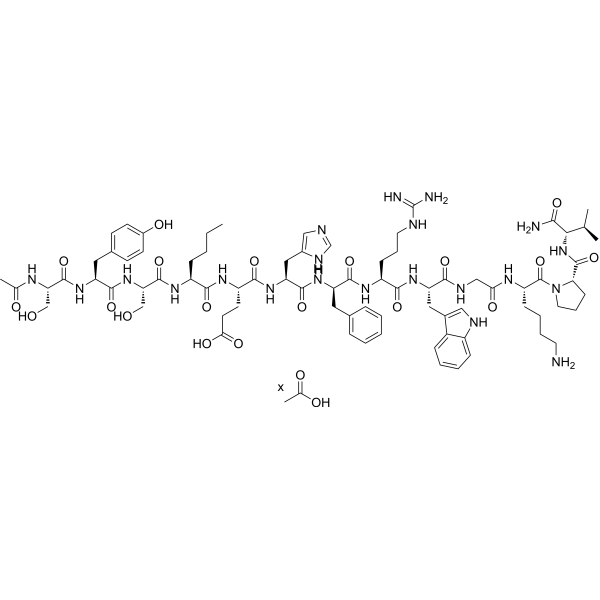 0 ImagesSynonyms: MT-I acetate; [Nle4,D-Phe7]-α-MSH acetateMelanotan I (MT-I; [Nle4,D-Phe7]-α-MSH) acetate is an α-MSH (HY-P0252) analog, synthetic melanotropic peptide, and melanocortin receptor (MCR) agonist. Melanotan I acetate induces skin tanning by mimicking the action of α-MSH on the melanocortin 1 receptor (MC1R) in melanocytes. As an appetite suppressant, Melanotan I acetate impairs the ability of insulin to inhibit endogenous glucose production, suppresses leptin secretion from adipose tissue, and thereby reduces voluntary feed intake in ewes. Melanotan I acetate can be used in research related to UV-induced skin damage, polymorphic light eruption, ruminant feeding, and sexual dysfunction.
-
hMC1R agonist 1
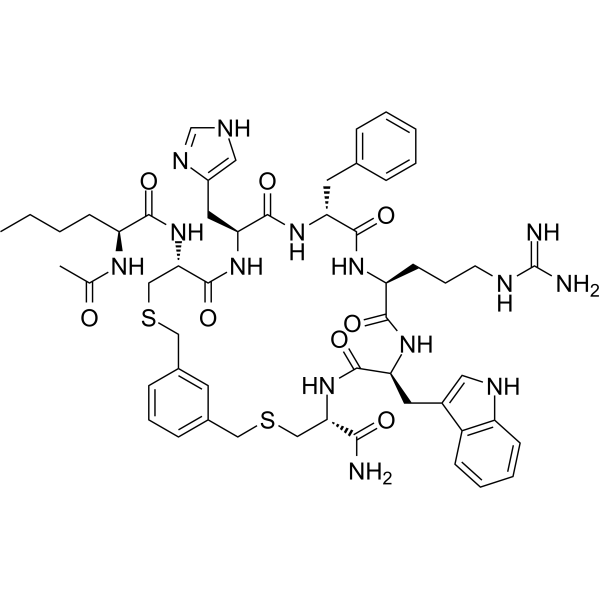 0 ImagesArt. -Nr.: HY-P99004CAS. Nr.: 3028881-87-7hMC1R agonist 1 is a selective hMC1R agonist. hMC1R agonist 1 activates adenylate cyclase to induce intracellular cAMP accumulation. hMC1R agonist 1 can be used for the research of immune-inflammatory disorders.
-
Palmitoyl tetrapeptide-20 TFA
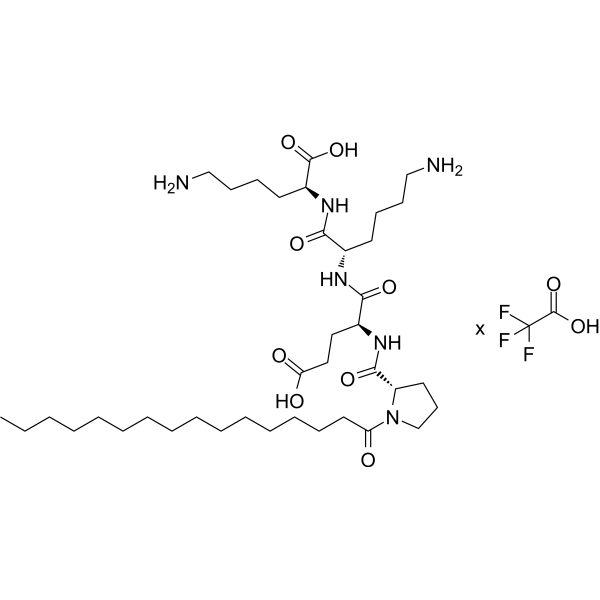 0 ImagesArt. -Nr.: HY-P5247ASynonyms: PTP20 TFAPalmitoyl tetrapeptide-20 (PTP20) TFA is a biomimetic peptide agonist of α-MSH. Palmitoyl tetrapeptide-20 TFA promotes hair pigmentation and delays hair graying by activating the MC1-R pathway (AC50: 0.16 nM), enhancing catalase activity to reduce H2O2 accumulation, and upregulating SIRT1 activity. Palmitoyl tetrapeptide-20 TFA can be used in research on preventing hair loss and improving hair graying.
-
Setmelanotide TFA
 0 ImagesArt. -Nr.: HY-19870ASynonyms: RM-493 TFA; BIM-22493 TFA; IRC-022493 TFASetmelanotide TFA (RM-493 TFA) is a blood-brain barrier-permeable, selective MC4R agonist with a Ki value of 2.1 nM for hMC4R. Setmelanotide TFA activates the CaMKK2/AMPK signaling pathway. Setmelanotide TFA mediates body weight homeostasis, feeding regulation and energy expenditure modulation; it reduces food intake, induces weight loss, decreases obesity severity, increases daytime activity and energy expenditure, lowers levels of leptin, triglycerides, fasting insulin and diastolic blood pressure, improves insulin sensitivity, glucose tolerance and fatty liver condition, and reverses respiratory depression. Setmelanotide TFA is applicable to research related to obesity, hyperinsulinemia, fatty liver and respiratory depression.
-
RY764
 0 ImagesArt. -Nr.: HY-111131CAS. Nr.: 491845-95-5
-
MSG606 TFA
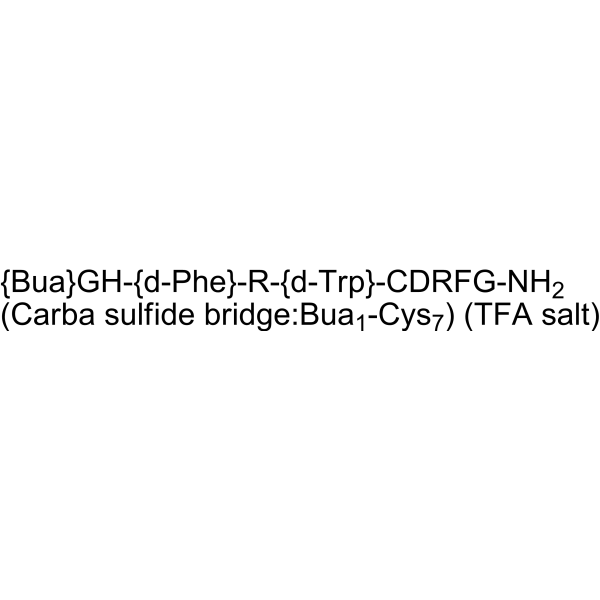 0 ImagesArt. -Nr.: HY-P1726AMSG606 TFA is a selective melanocortin 1 receptor (MC1R) antagonist. MSG606 TFA can abolish the neuroprotective effects of BMS-470539 (HY-15616) (MC1R agonist). MSG606 TFA can inhibit cancer cell proliferation and transition from the G1 to the S phase. MSG606 TFA can delay pain hypersensitivity and reduce cholesterol levels. MSG606 TFA can be used for the researches of cancer, inflammation, neurological and metabolic disease, such as breast cancer and subarachnoid hemorrhage (SAH).
-
(E/Z)-Resomelagon acetate
 0 ImagesArt. -Nr.: HY-168383CAS. Nr.: 959850-74-9Synonyms: (E/Z)-AP1189 acetate(E/Z)-Resomelagon acetate is an agonist of melanocortin receptor 1 (MC1R) and MC3R with anti-inflammatory activities. (E/Z)-Resomelagon can be utilized in inflammation research.
- 1
- 2



